Intune

Resolve HAADJ Intune auto-enrollment errors for devices previously enrolled in MAM 

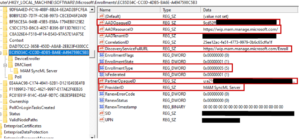
There never seems to be a shortage of issues when dealing with Hybrid Azure AD Joined + Intune Enrolling endpoints. Especially when you inherit a setup and have no history of what was implemented in the past. I encountered a new issue the other day and figured I’d made a quick post. In this situation, […]

Resolve HAADJ Intune auto-enrollment errors for devices previously enrolled in MAM  Read More »

Naming Hybrid Azure AD Joined Autopilot Devices Automatically using a Custom prefix and Serial Number

Naming Hybrid Joined devices during autopilot has always been very limited. You can’t use variables like %SERIAL% to add the serial number to the device name. You’re basically stuck using a prefix and a randomly generated string of characters. That’s not the best naming convention and it usually adds an additional step for IT admins

Naming Hybrid Azure AD Joined Autopilot Devices Automatically using a Custom prefix and Serial Number Read More »

Automate a Reboot or Custom Script When the Autopilot ESP is Complete

Introduction Sometimes you end up discovering pretty neat things as a result of working on an unrelated issue. That’s how this post was born. I have been working on a way to rename hybrid AADJ devices during Autopilot to use their serial number for several weeks (I’ll have that post finished in a week or

Automate a Reboot or Custom Script When the Autopilot ESP is Complete Read More »

Receive Teams Notifications with Details of Failed Custom Detection Scripts or Proactive Remediations

One big blog post I’ve been working on has spawned a couple of other smaller ideas, including this. There have been times when a complex custom application or customization needs to be deployed to endpoints. For applications and certain customizations, Win32 apps are usually the best way. However, this solution can also be applied to

Receive Teams Notifications with Details of Failed Custom Detection Scripts or Proactive Remediations Read More »

User extensionAttributes: Customizing User Contact Cards, Dynamic Groups, and Automating with Power Automate

I came across an interesting Microsoft learn page about using custom attributes on a user’s profile card a couple of weeks ago and did some testing. I felt the MS Learn article was a bit confusing, so I made this post to help clarify some things. Extension Attributes are essentially custom values you can add

User extensionAttributes: Customizing User Contact Cards, Dynamic Groups, and Automating with Power Automate Read More »

Skipping the First-Run Experience for the Windows 365 Preview application

Introduction: The Windows 365 Preview application is a great store app for organizations utilizing Windows 365 virtual desktops. Although currently, there is no “official” way to bypass the first run experience. From what I’ve heard, Microsoft says there may be some more options for this once the app is GA, but there is no timeline

Skipping the First-Run Experience for the Windows 365 Preview application Read More »

Azure AD Joined AVD with FSLogix + AAD Kerberos authentication

I’ve made it a priority recently to push organizations away from active directory domain controllers and adopt Azure AD Joined devices as much as possible. AVD has often been a hurdle since it’s usually configured to use pooled desktops, which rely on FSLogix, which use SMB shares, which rely on Kerberos authentication, which traditionally relies

Azure AD Joined AVD with FSLogix + AAD Kerberos authentication Read More »

Troubleshoot Intune Win32Apps with multiple detection rules

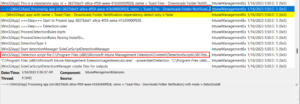
If you’re using Win32 apps with more than one detection rule, it’s advantageous to quickly determine which detection rule is failing. We get this information by inspecting the IME log on an affected device, but you need to know what to look for. The Intune Management Extension log is located in %programdata%\Microsoft\IntuneManagementExtension\logs\IntuneManagementExtension.log. It contains tons

Troubleshoot Intune Win32Apps with multiple detection rules Read More »